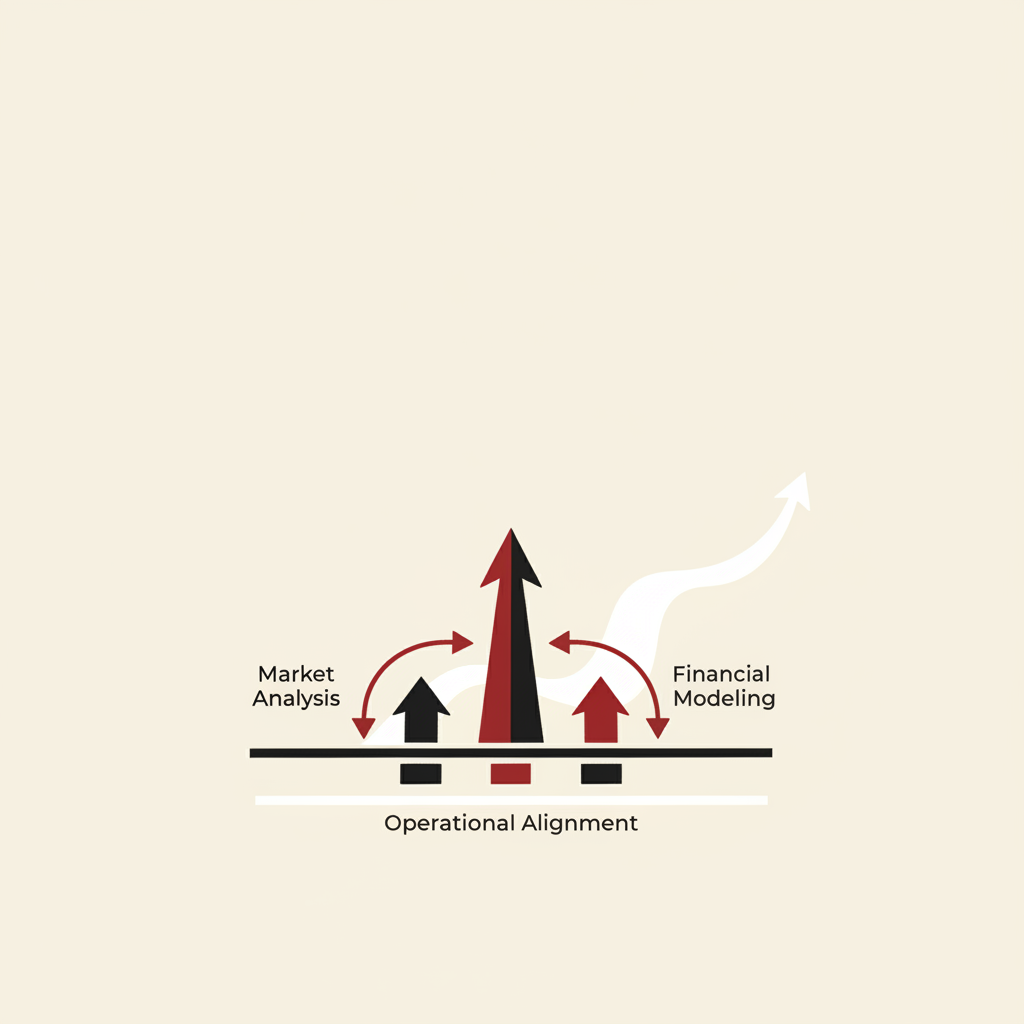

The Strategic Advantage: Why Fractional Often Wins for Growing Businesses
For many small and medium-sized enterprises (SMEs) and even some larger, more specialized organizations, the traditional full-time Chief Financial Officer (CFO) model, while seemingly robust, isn't always the optimal solution. The decision to bring high-level financial expertise into a company is a critical one, impacting everything from cash flow and investment strategies to operational efficiency and long-term growth. At Silveridge Group, we've observed firsthand that while a full-time CFO brings dedicated focus, a fractional CFO can often provide superior value, agility, and specialized expertise, particularly for businesses navigating specific growth phases, undergoing transformation, or requiring specialized financial insights without the associated overhead.
The role of a modern CFO has expanded significantly beyond traditional accounting. Today, a CFO is a strategic partner, deeply involved in business development, capital allocation, risk management, and often, technology adoption. For companies that don't require 40+ hours a week of this multifaceted expertise, or whose needs fluctuate, a full-time hire can lead to underutilized talent and unnecessary expenses. This article explores the scenarios where a fractional CFO not only performs but genuinely outperforms a full-time hire, providing a compelling case for this increasingly popular model.
Cost Efficiency Without Compromising Expertise
One of the most immediate and tangible benefits of a fractional CFO is the significant cost savings. A full-time CFO comes with a substantial salary, benefits package (health insurance, retirement contributions, paid time off), bonuses, payroll taxes, and often, relocation expenses or recruitment fees. These costs can easily exceed $200,000 to $300,000 annually, not including administrative support or office space.
A fractional CFO, conversely, charges for the time and expertise they deliver, typically on a retainer or hourly basis. This means a company can access top-tier financial leadership for a fraction of the cost of a full-time employee, paying only for the strategic insights and operational guidance they truly need. For a business with revenues between $5 million and $50 million, the financial leverage gained from this model can be transformative, freeing up capital for growth initiatives rather than fixed overhead.
Furthermore, fractional CFOs often work remotely, reducing the need for additional office infrastructure. They are typically independent contractors, which simplifies HR and payroll processes for the hiring company. This lean, agile approach to financial leadership allows businesses to maintain a robust balance sheet and optimize their operating expenses, directly contributing to higher profitability and more sustainable growth.
“The true power of a fractional CFO lies in their ability to parachute in, deliver strategic impact, and leave, without the long-term drag of a full-time overhead.”
Access to Diverse and Specialized Expertise
Another critical area where a fractional CFO often outperforms is in the breadth and depth of expertise they bring. A full-time CFO, while excellent in their specific role, typically possesses a background tailored to one or a few industries or company sizes. Their experience is singular, developed within the confines of their past employers.
Fractional CFOs, by the very nature of their consulting roles, work with multiple clients across various industries. This exposure equips them with a diverse toolkit of strategies, best practices, and problem-solving approaches. They've seen what works and what doesn't in different contexts, from manufacturing and SaaS to healthcare and professional services. This cross-pollination of ideas is invaluable.
Consider a company needing to prepare for an acquisition, optimize supply chain finance, or raise capital. A full-time CFO might have some experience, but a fractional CFO specializing in M&A, distressed asset management, or securing specific types of funding (like SBA/USDA lending or unitranche funding, services we assist with at Silveridge Group) will bring highly concentrated, relevant expertise. They can parachute in, implement specialized strategies, and then move on, leaving the company stronger and better positioned. This targeted expertise is particularly beneficial for:
- Capital Raises: Navigating complex debt or equity funding rounds.
- Mergers & Acquisitions: Due diligence, valuation, and post-merger integration.
- Turnarounds & Restructuring: Implementing plans to restore financial health.
- Strategic Planning: Developing long-term financial roadmaps tied to business goals.
- Specific Industry Challenges: Applying deep knowledge of regulatory environments or market dynamics.
The ability to tap into this specialized, on-demand knowledge without the long-term commitment is a distinct advantage that a full-time hire often cannot match, unless the company is large enough to afford a team of highly specialized financial executives.
Flexibility, Objectivity, and Rapid Implementation
The operational agility offered by a fractional CFO is a game-changer for dynamic businesses. Full-time hires, while dedicated, can sometimes be constrained by internal politics, established company culture, or a natural inclination to maintain the status quo. A fractional CFO, being an external advisor, brings a fresh, objective perspective. They are not beholden to internal hierarchies or legacy systems, allowing them to assess situations candidly and recommend unvarnished solutions.
This objectivity is crucial when difficult decisions need to be made, such as cost cutting, divesting underperforming assets, or overhauling inefficient processes. Their primary allegiance is to the company's financial health and strategic objectives, unclouded by personal career advancement within the organization.
Moreover, fractional CFOs are typically experienced implementers. They are brought in to solve specific problems or achieve defined financial goals, and they operate with a sense of urgency. Unlike a full-time hire who might spend weeks or months integrating into a company's culture and processes, a fractional CFO can hit the ground running, leveraging their extensive experience to quickly analyze situations, develop actionable plans, and oversee their execution. This rapid implementation can significantly accelerate progress on critical financial initiatives.
Consider a scenario where a company needs to implement new financial reporting systems or prepare detailed projections for a major investor presentation. A fractional CFO, having guided multiple companies through similar processes, can streamline these efforts, ensuring accuracy and compliance while freeing up internal teams to focus on core operations. This ability to deliver impactful results quickly and efficiently further solidifies the case for when a fractional CFO not only performs but truly outperforms a full-time hire, especially for businesses seeking an operational CFO (oCFO) program that integrates seamlessly with their existing team to drive tangible financial outcomes.